
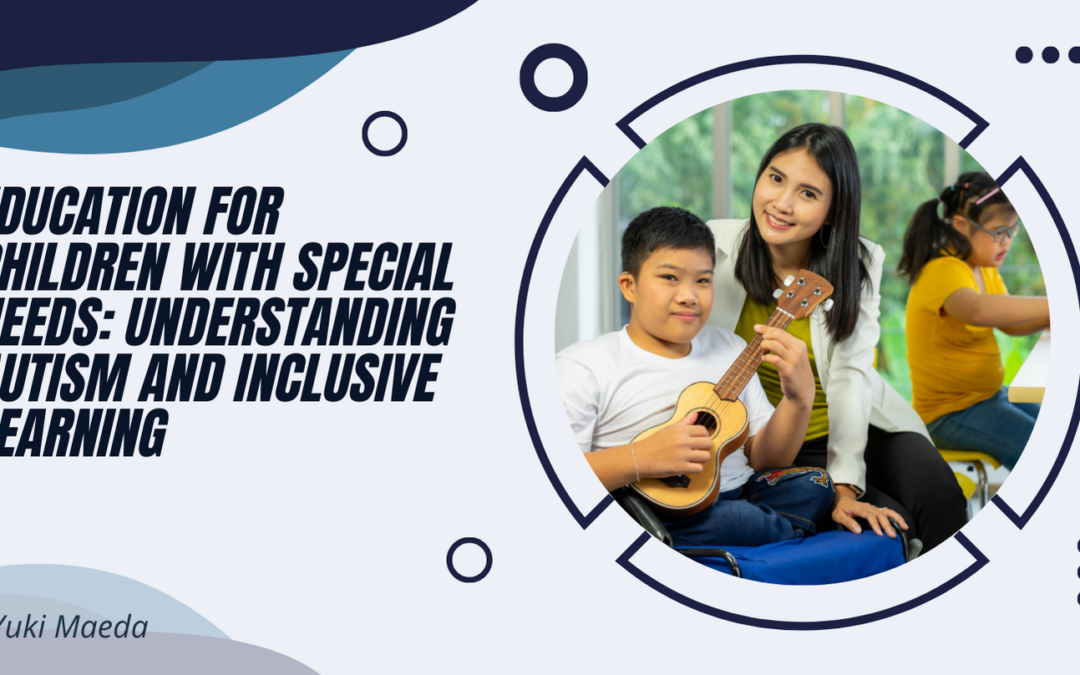
Education is a fundamental right for every child. Yet for children with special needs—especially those on the autism spectrum—accessing meaningful, supportive, and effective education remains a challenge in many parts of the world. Autism Spectrum Disorder (ASD) affects how individuals communicate, interact socially, learn, and process sensory information. Because autism presents differently in every individual, education for autistic learners must be flexible, inclusive, and deeply individualized.
This article explores autism in the context of education, the challenges autistic learners face, effective teaching strategies, the role of inclusive education, and how families, educators, and institutions can work together to create environments where every learner can thrive.
Understanding Autism Spectrum Disorder (ASD)
Autism Spectrum Disorder is a neurodevelopmental condition characterized by differences in communication, social interaction, behavior, and sensory processing. The word “spectrum” is key—autism exists on a wide range, from individuals who require significant daily support to those who are highly independent but may still face social or sensory challenges.
Common characteristics of autism may include:
-
Difficulty with verbal and non-verbal communication
-
Challenges in social interaction and understanding social cues
-
Repetitive behaviors or routines
-
Sensory sensitivities (to sound, light, textures, or movement)
-
Strong focus on specific interests
-
Differences in learning styles and processing information
Importantly, autism is not a disease to be cured. It is a neurological difference. Many autistic individuals possess exceptional strengths such as strong memory, attention to detail, creativity, honesty, and deep knowledge in areas of interest. Education systems must shift from a deficit-based view to a strength-based approach.
Educational Challenges Faced by Autistic Learners
Despite growing awareness, autistic students often face significant barriers in traditional education systems.
1. One-Size-Fits-All Teaching Models
Most mainstream classrooms rely on standardized teaching methods, rigid schedules, and verbal instruction. These approaches may not align with how autistic students process information, leading to frustration, anxiety, or disengagement.
2. Sensory Overload
Classrooms can be overwhelming environments—bright lights, loud noises, crowded spaces, and unpredictable routines can cause sensory overload, making learning extremely difficult.
3. Social Expectations
Group work, peer interactions, and unspoken social rules can be confusing or stressful for autistic students. This often results in social isolation or misunderstanding by peers and teachers.
4. Communication Barriers
Some autistic students are non-verbal or minimally verbal, while others may struggle with expressive or receptive language. Traditional assessment methods may fail to capture their true understanding and abilities.
5. Lack of Trained Educators
Many teachers receive limited training in special education or autism-specific strategies, leaving them unprepared to support neurodiverse learners effectively.
The Importance of Early Intervention
Research consistently shows that early identification and intervention significantly improve educational and developmental outcomes for autistic children. Early intervention programs focus on building communication, social, cognitive, and adaptive skills during the most critical stages of brain development.
These programs may include:
-
Speech and language therapy
-
Occupational therapy
-
Behavioral and developmental approaches
-
Play-based learning
-
Parent training and involvement
When children receive support early, they are more likely to develop skills that help them succeed in school and beyond.
Inclusive Education: What It Means and Why It Matters
Inclusive education refers to educating children with special needs in general education classrooms alongside their neurotypical peers, with appropriate supports and accommodations.
Benefits of Inclusive Education
-
For autistic students: increased social exposure, peer modeling, and access to a broader curriculum
-
For neurotypical students: greater empathy, acceptance, and understanding of diversity
-
For society: reduced stigma and stronger inclusion values
Inclusion is not simply about placing autistic students in mainstream classrooms. True inclusion requires thoughtful planning, individualized supports, and a school culture that values diversity.
Effective Teaching Strategies for Autistic Students
There is no single “best” method for teaching autistic learners. However, several evidence-based strategies have proven effective across educational settings.
1. Individualized Education Plans (IEPs)
An IEP outlines a student’s specific needs, goals, accommodations, and services. It ensures education is tailored rather than standardized.
2. Structured and Predictable Environments
Clear routines, visual schedules, and consistent expectations reduce anxiety and help autistic students feel safe and ready to learn.
3. Visual Supports
Many autistic learners process information visually. Charts, pictures, symbols, videos, and written instructions can enhance comprehension and independence.
4. Sensory-Friendly Classrooms
Adjustments such as quiet spaces, noise-reducing headphones, flexible seating, and soft lighting can significantly improve focus and comfort.
5. Strength-Based Learning
Leveraging a student’s interests—such as technology, art, numbers, or science—can boost motivation and engagement.
6. Alternative Communication Methods
For non-verbal students, tools like picture exchange systems (PECS), communication boards, or assistive technology allow them to express needs and ideas.
The Role of Teachers and Schools
Teachers are at the heart of inclusive education. Their attitudes, knowledge, and flexibility directly impact student success.
Teacher Responsibilities Include:
-
Adapting teaching methods
-
Creating inclusive classroom cultures
-
Collaborating with special educators and therapists
-
Communicating regularly with families
-
Encouraging peer acceptance and anti-bullying practices
Schools must support teachers through:
-
Professional development and autism training
-
Adequate classroom resources
-
Access to specialists and support staff
-
Policies that prioritize inclusion and mental well-being
The Role of Parents and Families
Families are lifelong advocates for autistic children. Their involvement in education is crucial.
Parents support learning by:
-
Collaborating with teachers and therapists
-
Reinforcing skills at home
-
Advocating for appropriate accommodations
-
Encouraging independence and self-advocacy
-
Supporting emotional well-being
When schools and families work as partners, children experience greater consistency, confidence, and success.
Technology and Autism Education
Technology has transformed education for autistic learners. Assistive and educational technologies help bridge communication gaps and personalize learning.
Examples include:
-
Speech-to-text and text-to-speech tools
-
Educational apps tailored to autism
-
Online and self-paced learning platforms
-
Virtual reality for social skills practice
-
Tablets and AAC (Augmentative and Alternative Communication) devices
When used thoughtfully, technology empowers autistic students to learn in ways that align with their strengths.
Transitioning to Adulthood and Lifelong Learning
Education for autistic individuals does not end with school. Preparing students for adulthood is a critical component of special education.
Transition planning may include:
-
Life skills and daily living education
-
Vocational training and career guidance
-
Higher education support
-
Social skills and self-advocacy development
With proper support, autistic adults can succeed in higher education, employment, entrepreneurship, and independent living.
Building a More Inclusive Future
Autism education is not only about supporting autistic students—it is about redefining how society views intelligence, ability, and success. Inclusive education challenges us to move beyond narrow definitions of learning and recognize that diversity strengthens communities.
By investing in training, inclusive policies, early intervention, and empathy-driven education systems, we create spaces where autistic learners are not merely accommodated—but truly valued.
Conclusion
Education for children with autism and other special needs is both a responsibility and an opportunity. It calls for patience, creativity, collaboration, and compassion. When educational systems embrace neurodiversity and prioritize inclusion, they unlock the potential of millions of learners who think, experience, and contribute differently.
Every child deserves an education that respects who they are—not who they are expected to be. By building inclusive, flexible, and supportive learning environments, we move closer to a world where all minds are welcomed and all learners are empowered.